Condition 1 Combat Center: Your Local Self-Defense Hub
If you live in or around Spring, Texas, and you have been typing martial arts classes near me into your phone, you are looking for more than a workout. You want practical skills, coaches who actually teach, a schedule that respects a real job and family life, and a place where first-timers do not feel like outsiders. Condition 1 Combat Center delivers on that mix. It is a self-defense hub first and a fitness studio second, built for people who want competence along with conditioning. The energy is serious without being stiff, and the instruction is direct without being harsh.
I have visited many gyms that talk about self-defense, then run a boot camp with punching. The difference shows up fast at Condition 1. Drills replicate decisions you might face in a parking lot, a school hallway, or outside a crowded venue. Conditioning is woven in, but not martial arts school near me at the expense of technique. The goal is capability you can call on under pressure, not just sore calves and a headband photo.
What it means to be a self-defense hub
A true hub does not lock you into one style. It connects skills and mindset. At Condition 1, you will see striking, clinch control, ground escapes, situational awareness, and scenario training tied into a coherent approach. Classes meet you at your level, whether you have never thrown a punch or you wrestled in high school fifteen years ago. That adaptability matters more than any logo or lineage because real incidents do not follow a script.
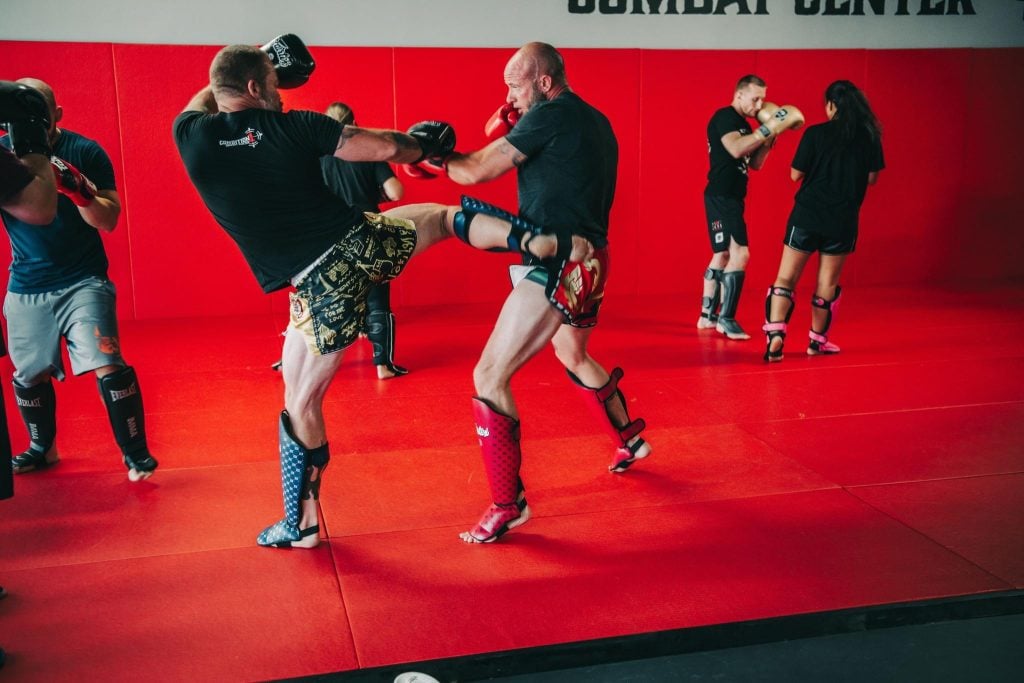
On a typical evening, the mat has a mix of beginners learning how to keep their hands up while moving their feet, parents refining grip breaks their kids learned earlier in the week, and a handful of advanced students sharpening entries against resistance. The coaches do not let advanced folks hog the room. Beginners get time, detail, and feedback, and they are encouraged to partner with people who help them, not just beat them. It is a culture you notice in the first ten minutes.
The Spring, TX advantage
Condition 1 Fitness classes in Spring TX pull from neighborhoods along I-45 and the Grand Parkway. That matters because commute friction kills consistency. If you can get from Rayford to the gym in under 20 minutes most evenings, you will keep showing up. The team has leaned into that reality with morning, evening, and weekend martial arts classes, plus after school martial arts classes that line up with pickup times from several local schools.
I have watched attendance ebb and flow across seasons. Spring sports, hurricane prep season, holidays, and tax-time crunches can derail the best intentions. In this part of Texas, heat and traffic are their own calendar. A gym that times programming to local rhythms, including weather and school schedules, keeps people training. Condition 1 does it with flexible slots and rotating curriculum blocks, so if you miss a week, you are not lost.
Who thrives here
The space works for a broad mix. If you want a row of mirrors and dance lighting, this is not your place. If you want honest training in a supportive room, you will fit. I have seen three patterns of success repeat here.
- Parents who want kids martial arts classes that build awareness without turning children into mini bouncers. The emphasis is on posture, voice, boundaries, and simple, repeatable movements. Coaches loop parents in so that rules for practice at home match rules in class, which helps kids progress faster and keeps skills from becoming party tricks.
- Adults who want beginners martial arts classes that are not humiliating. First timers get a clear path: stance, movement, breath control, fence positioning with the hands, and a few reliable strikes and exits. The pressure ramps slowly and predictably. You will not be tossed into shark week on day one.
- Families who choose to train together. Family martial arts classes are available at least once a week. When dads and daughters practice the same wrist release and verbal command sequence, they apply a shared household language to safety. It sounds small, but it becomes a powerful habit.
What a first month looks like
New students often ask what progress feels like early on. In the first ten classes, you will learn how to stand, how to move without crossing your feet, and how to stack your structure so you do not gas out. You will learn a handful of strikes that you can deliver without injuring your own hand, and a few exits that do not depend on flexibility or size. You will also learn when to give up your bag to avoid a fight and when to hold it because you have no clean escape. That judgment training is built into scenarios, not just lectures.
By week three or four, your heartbeat will settle faster under stress. You will notice that you look around more when you enter a room. You will know how to hold pads for a partner, which is an underappreciated skill that cements technique for both people. On the fitness front, a two minute striking round that felt brutal at first starts to feel manageable. You will not be a ninja. You will be less rattled, and that is the real win.
Kids classes that build confident decision makers
Kids do not need adult-sized techniques. They need boundaries, voice, and options that match their size. The kids martial arts classes at Condition 1 teach a posture called the ready stance that signals confidence without threatening anyone. From there, coaches build simple escapes from common grips, like someone grabbing a wrist or hoodie. Children learn to step off-line, align elbows to hips, and create a path to a teacher or trusted adult. They practice saying Stop, back up in a calm but firm voice, and they run that script enough times that it sticks.
Bullying is addressed without bravado. Children practice how to walk away, how to avoid getting cornered near lockers or buses, and how to get help sooner rather than later. For accountability, parents receive short notes on what was taught each week along with at-home practice cues. Progress is measured in competence, not belts stacked every other month.
The after school martial arts classes are a lifesaver for working parents. The schedule intersects with common dismissal times and includes a homework window before class. That rhythm keeps evenings from becoming chaos, and it means students arrive calm instead of sugar-rushed. The results show up in better focus, not just in roundhouse kicks.
Adult training that respects busy lives
The adult martial arts classes are built around a simple idea: you only remember what you can test against resistance. Classes cycle through striking, clinch control, ground escapes, and scenario drills. You might spend one week on striking entries and exit angles, then shift to bear hug defenses and wall awareness. You will not leave class with a vanity combo of twelve moves you can barely recall. You will leave with two or three skills you could use tonight.
For brand new adults, the onboarding is deliberate. Coaches cover hand conditioning to prevent knuckle injuries, proper alignment for elbows and knees, and the difference between sport and self-defense applications. When ground training appears, it focuses on getting back to your feet quickly more than hunting for submissions. If you already have a background in wrestling, boxing, or Jiu-Jitsu, you will get details that sharpen your strengths while filling obvious gaps, like defending strikes on the ground or controlling distance in tight spaces.
Weekend martial arts classes pull a larger group, including those who commute downtown during the week. Weekend sessions often feature longer scenario blocks that simulate real constraints: low light, limited space, uneven footing, and verbal chaos. That kind of training improves decision speed and breath control more than any bag drill.
Private lessons when you need a focused jump
Not everyone learns best in a group. Private martial arts classes at Condition 1 are common for three reasons: rapid skill acquisition before travel, focused work after a scary incident, or schedule constraints that do not match group offerings. A typical private session starts with a short needs assessment and video of your movement from two angles. Coaches then build a micro progression around your goals, whether that is situational awareness for rideshare drivers or grip breaks and breakfalls for someone who works around heavy equipment.
For couples, private sessions can double as date night with purpose. One pair I met, both in their 50s, worked on boundary setting and movement around vehicles. They started with zero experience and by session four they were coordinating verbal cues and angles like they had practiced for months. The key is simple, consistent reps under calm coaching.
Fitness that serves function
Condition 1 Fitness classes in Spring TX are not random circuits with catchy names. They are built to support striking, clinch strength, and the ability to move with balance under fatigue. Expect kettlebells, sandbags, sleds, and bodyweight work that translate to the mat. You will not be benching your one rep max and calling it a day. You will hinge, rotate, and carry, then learn to breathe through your nose while moving so you can keep your head clear when things get hard.
The biggest mistake people make is separating fitness from technique. They go crush a leg day, then try to learn footwork while their quads are fried. At Condition 1, the sequence is designed so you learn new movement fresh, then layer in conditioning that grooves that movement pattern rather than scrambles it. That is one reason retention is high. People see skill carry into fitness and fitness carry into skill.
If you are price conscious and hunting for affordable martial arts classes, ask about class packs and member bundles that include both fitness and combatives. While pricing varies month to month with promotions, combining services tends to drop the per-class cost compared to paying separately.
Safety, culture, and coaching quality
Good rooms are kind to beginners and hard on bad habits. The safety culture at Condition 1 shows up in the little things: instructors demonstrate how to tap verbally and physically, they correct poor pad holding before it gets someone hurt, and they insist on controlled contact until both partners agree to raise intensity. There are clear protocols for sanitizing mats, storing gear, and handling minor injuries. No one wants a sprained wrist to turn into six weeks off work.
Coaches do not hide behind mystique. They explain the why behind a movement, show variations for different body types, and welcome questions. If a technique relies on timing more than strength, they say so and build a progression around timing. If a movement will not work reliably for a smaller person against a larger attacker, they adjust the plan. That honesty builds trust. You will also see coaches training in their off hours, which sounds obvious but is not universal. It matters because coaching rusts fast when you stop learning.
How scenario training changes outcomes
Most real incidents are short and messy. They involve bad angles, surprise, and a social script. Scenario training addresses that by adding context. In one session I watched, students practiced de-escalating a person who was blocking a doorway while shouting. The task and the rules were clear: you cannot strike first, your exit is behind the person, and there is a rail to your right. Students learned to use the rail to create space, changed their level to slip by, and kept a hand up to protect the head as they passed. No heavy bag teaches that.
Another session simulated an attempted bag grab at a gas station. The key lesson was not the strike. It was learning to let go, move around the pump to create a barrier, and get inside a vehicle safely if that was the best option. The coaching focused on choices and awareness, not hero stories. That is what makes Condition 1 a self-defense hub rather than a sport-only gym.
Finding your path through the schedule
You do not need to train every day to make progress. Three sessions per week is a healthy baseline. One day of technique focused striking or clinch, one day of ground escapes and stand-ups, and one fitness class that supports those skills. Over time, you can add a weekend scenario session every other week to pressure test. If your work week is unpredictable, anchor one weekend class and fill in weekdays as life allows. Consistency beats intensity.
For parents juggling activities, the after school option can anchor the week. Kids train two days, parent trains one weekday or a weekend session, and a family class once a month brings everyone together. That rhythm keeps skills aligned across the household and keeps evenings from becoming a shuttle race.
What to consider if you are comparing gyms
A quick drive around Spring shows plenty of local martial arts classes. Not all are equal, and price alone will not tell the story. Before you commit anywhere, measure the fit.
- Watch how beginners are treated. If the room laughs at first-timer mistakes, keep driving.
- Ask how often scenario training is offered. If the answer is rarely, you are signing up for sport, not self-defense.
- Check the coach to student ratio at peak hours. If one coach is trying to manage 25 people, details get lost and safety slips.
- Confirm how striking power is scaled. You should see clear rules and consent before contact ramps up.
- Map the commute at your training times, not just at noon on a Sunday. If it is 40 minutes each way, you will not last.
If Condition 1 checks more of those boxes for you, that is a strong signal that the place will support your goals for the long haul.
Budget, gear, and getting started
Students often ask what gear to buy first. Start small. A good mouthguard, hand wraps, and a pair of 14 or 16 ounce gloves if you intend to box or kickbox. For grappling or clinch work, bring a rashguard and shorts without zippers. The gym provides starter gear for new students during trial classes, but having your own kit fits better and reduces wait time as classes grow.
As for budget, most people compare membership to a streaming bundle or a couple of dinners out each month. That is a fair frame. If you are looking for affordable martial arts classes, ask about family rates, military or first responder discounts, and pay-per-class options for shift workers. Some students use class packs to manage travel-heavy months, then slide into membership when their schedule settles.

How to approach your first class
Nerves are normal. Arrive 10 to 15 minutes early. Wear comfortable athletic clothing, bring water, and let a coach know if you have any injuries that need modification. You will warm up with movement that previews the day’s technique. Then you will learn a couple of skills, practice slowly, and add a little pressure. If you do not remember half of it later that night, do not worry. The next class will revisit key pieces and your body will pick up the rest.
Hydrate before you arrive, not after the warmup. Eat a light meal 90 minutes before class so you have energy without feeling heavy. If you trained years ago, do not try to prove you still have it on day one. Prove you can listen, adjust, and move well. That mindset will spare you annoying injuries and accelerate your progress.
What families say over time
Feedback from families tends to focus on three themes. First, kids get louder in the right ways. They speak up earlier when something feels off, whether at school or in a store. Second, parents notice that arguments at home de-escalate sooner. Training teaches people to breathe and create space, which applies to domestic friction as much as to street encounters. Third, people sleep better. Fatigue from honest training is different from desk tired. You earn it and your brain seems to turn down the noise at night.
An anecdote that sums it up: a mom told me her middle schooler used a boundary phrase and a step-back posture to stop a classmate from grabbing at his backpack. No scuffle, no trip to the principal, just clarity. That is the outcome you want. Skill with restraint.
Why Condition 1 stands out on the web
If you are scanning options online, you will see Condition 1 Fitness classes in Spring TX highlighted on condition1combat.com. The site gives you class times, coach bios, and a way to book a trial. More important, it reflects what you feel in the room: straightforward, no fluff, and focused on results. You will not see endless rank charts or mystery fees after checkout. If you prefer to talk with a human, the front desk staff actually picks up the phone during business hours and calls back when they say they will.
For those torn between a larger franchise and a local gym like Condition 1 Combat Center, remember the trade-offs. Big boxes can offer more parking and a larger calendar, but the coaching consistency and scenario depth can vary class to class. Local outfits live or die by quality and retention. Condition 1 grows because members bring friends and family, not because of endless coupons.
Final recommendations if you are on the fence
Training is a commitment, but it should not feel like a gamble. Take a trial class. Watch how coaches manage the room. Ask a couple of students how long they have been there and why they stay. Look for evidence that people progress, not just survive workouts. If you want a plan, aim for six weeks of consistent attendance before judging results. That window is long enough for your nervous system to adapt and your conditioning to stop stealing attention from learning.
If you want to get started, visit condition1combat.com and book a slot that fits your week. Whether you are hunting for adult martial arts classes, a reliable after school program for your kids, or private martial arts classes tailored to a tight schedule, Condition 1 Combat Center has a path that makes sense. The training is practical, the culture is constructive, and the skills carry outside the mat. That is what a local self-defense hub should be.
Ends · LANEUTHM347